CPA Experts Plano AlternativeLook the rate up
The useful part, once the panic settles, is often a lookup instead of a stack of tabs.
Bring the rate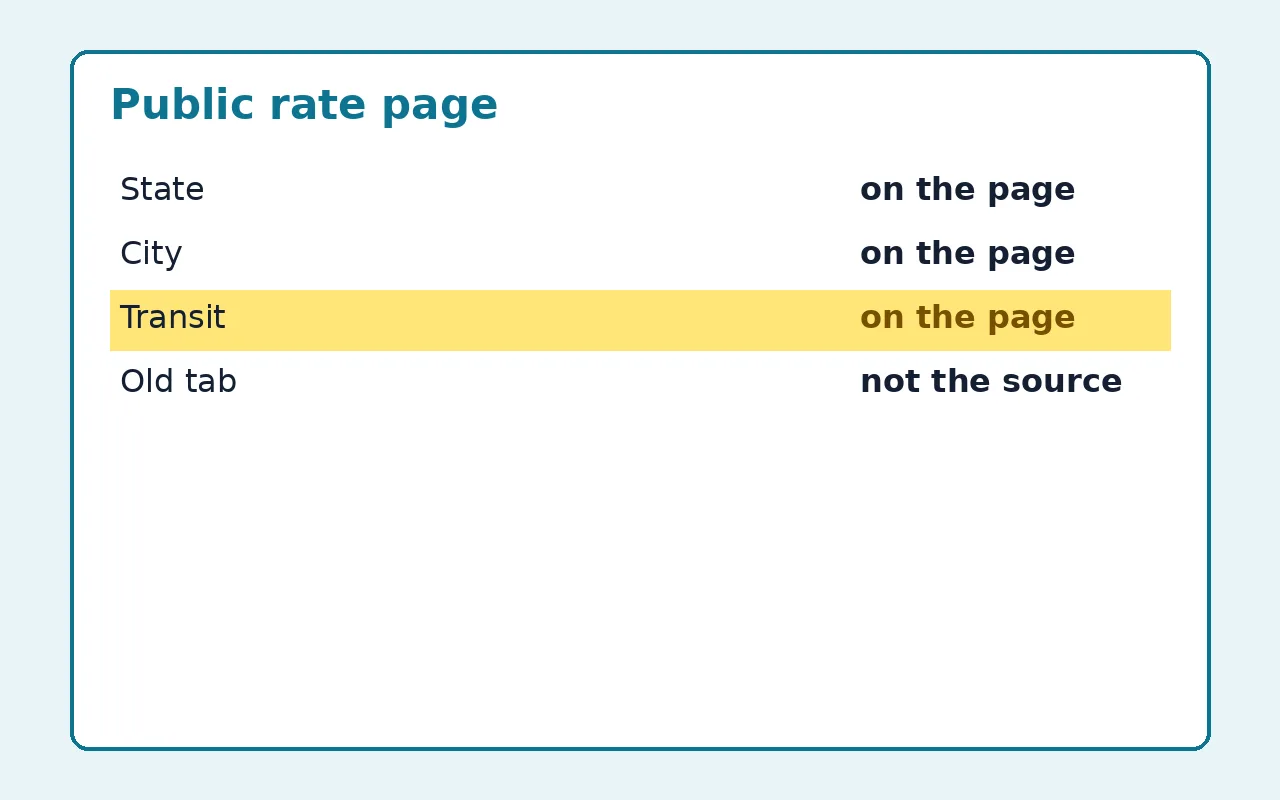
Read the rate where the state prints it
Tabs in a point of sale system remember whatever someone typed on the day the shop opened. The Comptroller page is the rate that will be graded. We would rather open that page, write the pieces down, and then teach the system. State, city, transit. For a taxable sale in Plano those three are 6.25, 1, and 1. A neighbor city that never joined DART does not have the third piece. The books should not invent a fourth.
Plano is the largest city in Texas without an interstate highway. People arrive on the tollway, on Preston Road, or on a surface street, and they still get where they meant to go. A rate lookup has the same mood. It is not a shortcut through someone else's memory. It is the direct road, and it is public.
Hotel tax is a different stack, and it does not belong in the sales tax payable account just because both are called tax. State hotel tax is 6 percent on a room at the threshold the Comptroller names, and the local piece starts at its own threshold. If you rent rooms, those totals get their own lines. Mixing them makes both returns wrong in a way that looks tidy.
We keep a one page note of which rates apply to which kind of sale, and we do not decorate it. When a new product starts, we ask where the buyer is and what was sold before we add a button. The month then closes against that note, not against a hunch.
If your software cannot hold two rates, the workaround is a separate item or a separate day, written down, not a blended percent that matches neither city. Blends feel clever until the notice arrives.
The page that outranks a memory.
The public page wins every argument with a tab. We open it, we write the three pieces for a taxable sale in this city, and only then do we touch the software. State, city, transit. A neighbor city that never joined the transit agency simply lacks the third piece. Nothing in the books should invent a fourth piece to make a column look even.
A new button in the point of sale is a small ceremony. What was sold. Where the buyer stands or where the goods transfer. Whether the thing is taxable at all. We would rather ask those three on a quiet Thursday than explain a blended rate to an agency later. Blends are how a clever afternoon becomes a notice. Separate items, or separate days, written on one plain page, are how the month stays closable.
Rooms are a different family of tax from a plate or a part. The state piece on a room starts at its own threshold, and the local piece starts at another. Dropping both into the sales tax payable account because the word tax appears on each makes two returns look tidy and both of them wrong. If the shop rents rooms, those totals live on their own lines and their own due dates.
Legacy West's retail garage on a weekday morning is a large structure with almost nobody in it. The settings screen of an old shop system feels like that to us. Lots of space, a few cars left from years ago, none of them the rate you should be charging now. We clear the old rate on purpose. Empty and correct beats full and inherited. A rate left over from the year the shop opened is a souvenir, and souvenirs do not belong on a ticket a customer is paying today.
What rate is the system using

You will be talking to the Steven Palmieri practice.