CPA Experts Plano AlternativeWho owns the month
Owners are often asking who is going to close the month after the extra percent has been recorded.
Point at the month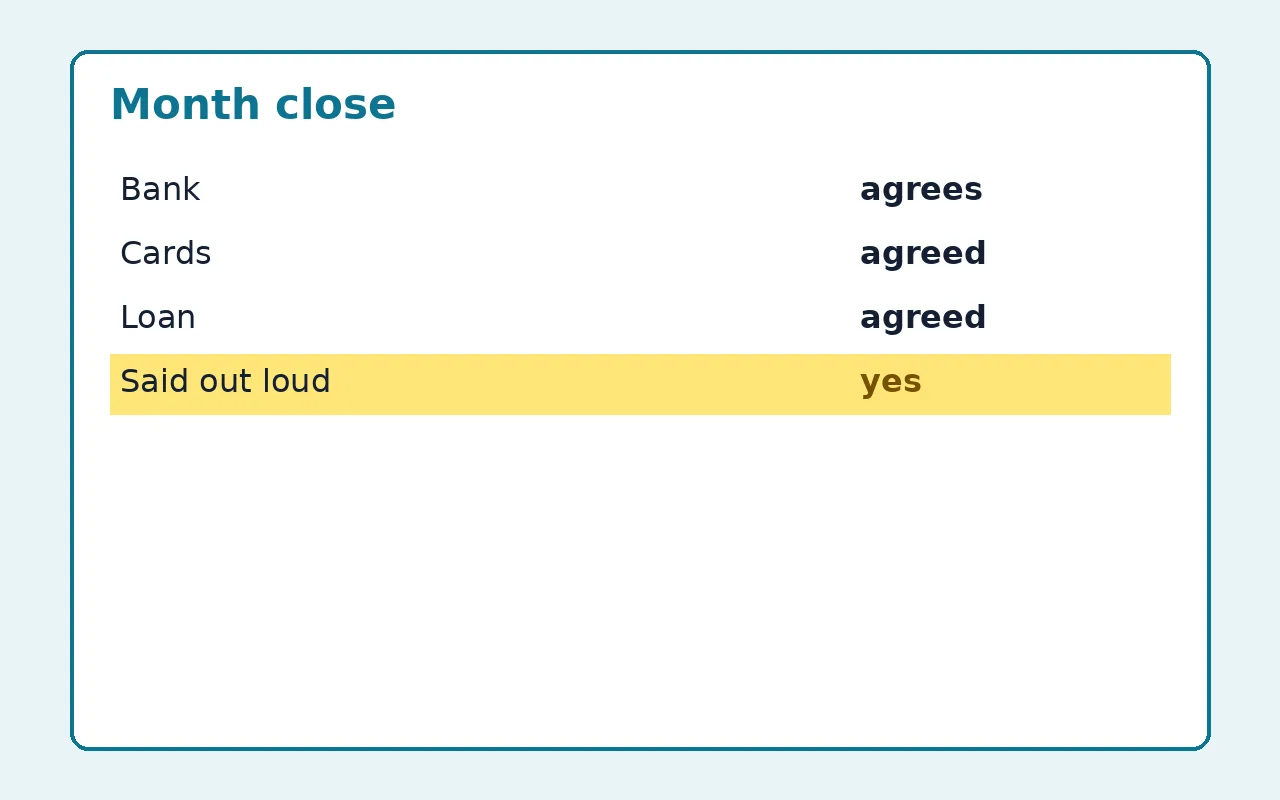
The close is a person, not a percent
A rate can be right and the month can still be open. The percent is a line on a return. The close is the moment someone says the bank, the cards, the loans, and the sales tax payable all agree, and nothing important is waiting on a question. We want that person's name to be ours, in the same conversation as the return, so the story does not change hands in March.
What usually blocks it is ordinary. A deposit with no memo. A payment that cleared and was never marked. An owner draw sitting inside an expense account, so the profit looks smaller than the cash. A card feed that stopped in the middle of the month and nobody noticed until the statement arrived. None of that is dramatic. All of it keeps the month from having a last page.
We tie the bank first. Then the cards. Then the loans. Then the sales tax payable, including the transit penny if the sale was in Plano. Categories stay put from one month to the next so a comparison means something. If a question is still open, we leave the month unfinished and we name the question out loud.
The first month with a new shop is slower. After that, the close should feel like a date on a calendar rather than a project. You get a short read. What you made. What you owe. What is coming. The decisions that still fit inside the year get named while they can still be made.
Arbor Hills has an observation tower and a pond over a couple of hundred acres of prairie and woods. We like the idea of a high place where the ground still makes sense. A closed month is that kind of view. You can see the shape without pretending every twig has been labeled.
If nobody has owned the close, the return is waiting on a pile. We will not draft it from that pile. We close first, or we tell you the cleanup is the wrong job and stop.
What a finished month still shows.
We treat the feed as a suggestion, not a verdict. Lines still sitting in the for-review pile have not been accepted by a person, so they are not in the close. A match against the statement comes after a human has said the category is the same one we used last month. A transfer between your own accounts is recorded as a deposit into one account that points back at the other, so both sides can clear. We do not book that movement as if a customer had bought something.
Loan payments get split. Principal is not an expense, and interest is not a balance-sheet ghost. An owner draw that has been hiding inside supplies will make the profit look worse than the cash, and it will also make a later reader doubt every other line. We pull the draw out and we say so. A piece of equipment bought in the month is asked one question. Is this a repair that keeps last year's asset working, or a new asset with a life. The answer changes the year. We do not let a receipt dump decide it.
The short read after that is three beats. What the shop made. What it owes, including the transit penny if the sale was inside the member city. What is coming that can still be chosen. If any of the three depends on a question, the read says the question and the month stays open. Pretty formatting is not a substitute for that sentence.
Parker Road is the end of the northbound run, which gives the line a real stop rather than a fade. We want the month to end the same way. A date, a person, a statement that ties. After the first slow month, that stop should land in the same week every time. If we miss it, you hear it from us before you feel it in April.
Which month is still open

You will be talking to the Steven Palmieri practice.