CPA Experts Plano AlternativeThe penny Frisco does not pay
The trouble often starts when a sale in this city and a sale in Frisco do not carry the same tax, and nobody has written down why.
Ask about a sale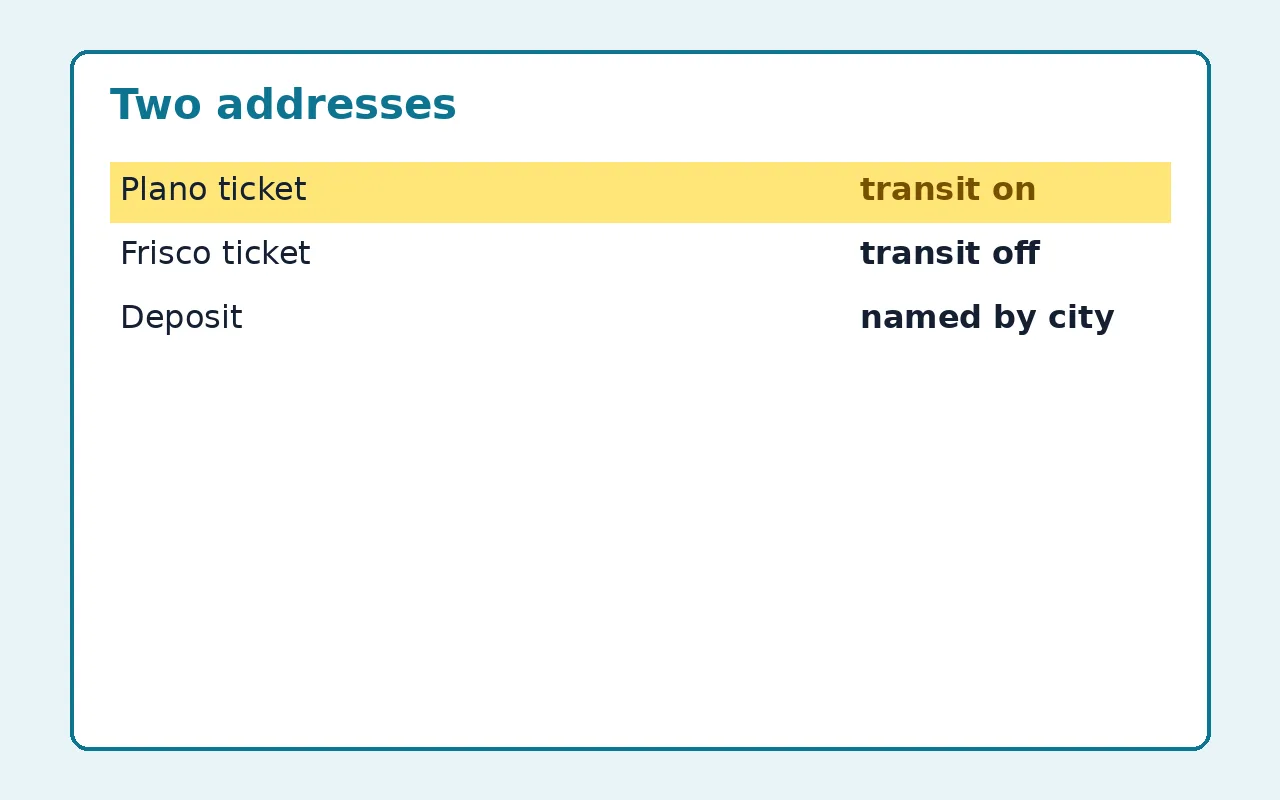
Why a sale in Plano carries a penny Frisco does not
Plano is a member city of Dallas Area Rapid Transit. The local sales stack here is the state rate of 6.25 percent, the city rate of 1 percent, and the DART transit rate of 1 percent, in place since the first day of 1984. Frisco, McKinney, and Allen never joined, so they skip that transit piece. The county layer is simply missing, and the ticket stops after state, city, and transit. An owner who sells on both sides of that line has two different totals, and the books have to know which address the sale belonged to.
That is the whole of the famous penny. It is not a personality trait of the city. It is a transit tax on a taxable sale. If the point of sale system has one rate for every ticket, the month will not match the return you file on the 20th. A shop that files every month sends December's tax on 20 January, and the same step repeats each month after. A shop on the quarterly calendar sends on the 20th of April, July, October, and January.
We keep that split in the books as a matter of habit. A deposit from a Saturday market is named for the city it was earned in. A delivery is named for the rule that actually applies, not for whichever rate was easiest to tap. When the return is prepared, the penny is already in the right column.
The Red Line still ends its northbound run at Parker Road station, and the station in downtown Plano sits on the east side of Haggard Park. We like a train that leaves when it said it would. A sales return deserves that same kind of promise. The penny should already sit in its column the night before the 20th.
A question for the Comptroller cannot be asked at a counter inside this county. The state's list points people to a counter in Dallas or to the virtual field office. That is a drive or a login, not a reason to guess the rate. The lookup is public. We would rather read it than inherit last year's setting.
If you sell in only one city, the work is smaller and the habit is the same. The rate lives on the invoice, the deposit matches the invoice, and the return matches the deposit. The month can close without a debate about a penny that was never written down.
The city written on the ticket.
A Saturday stall at Oak Point and a Tuesday invoice from a shop on the east side can both be honest and still need different totals. The preserve does not change the percent. The address of the sale does. We want that address captured while the card batch is still warm, not reconstructed from a memory a month later when the balloons or the ordinary lunch rush have already moved on.
Shipping is where shops get quiet and hope. A buyer who pays in Frisco for goods that transfer in Plano is not a mood. The rule follows the place the taxable sale is sourced, and the software's default city is often just the city where the reader was unboxed. We write the sourcing down in a sentence the owner can repeat, then we teach the button. If the button cannot hold two rates, we split the item or the day. We do not average them into a percent that matches neither town.
The books then carry a trail a stranger could follow. This deposit, this city, this batch. When the return is prepared, the penny is already sitting in the column the state will grade. The night before the 20th should feel like checking a timetable, the way a northbound train at the station in downtown Plano either leaves on the posted minute or it does not. It should not feel like archaeology.
If only one city is in the year, we still want the rate read from the public page rather than inherited. A single-city shop can go stale too, the day a product starts or a marketplace begins collecting. The habit is small. The notice, when a stale rate finally draws one, is not.
Tell us where the sales happen

You will be talking to the Steven Palmieri practice.